
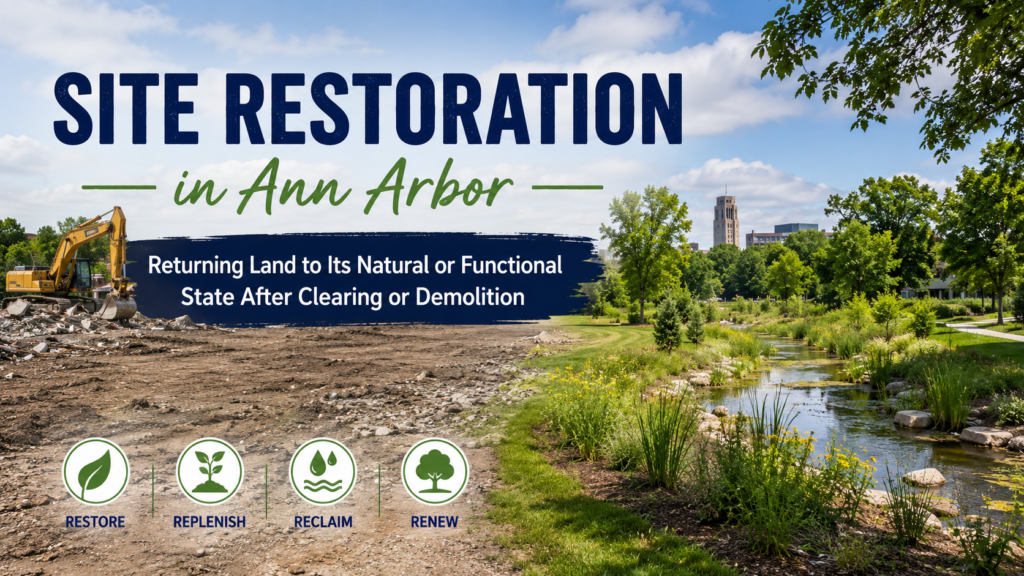
When trees are cleared, structures are demolished, or soil is disturbed for construction and excavation, the land does not simply return to a usable or healthy state on its own. Site restoration is the deliberate process of returning a piece of land to a stable, functional, and often ecologically sound condition following disturbance. In Ann Arbor, a city known for its tree canopy, environmental initiatives, and thoughtful land use, Site Restoration Ann Arbor is both a practical necessity and a community expectation.
What Site Restoration Means in Practice
Site restoration encompasses a range of activities performed after land clearing, demolition, or significant earth disturbance. The specific work involved depends on what was done to the site, what the land will be used for next, and what environmental conditions exist on the property. In general terms, site restoration aims to stabilize soil, restore appropriate drainage, prevent erosion, and prepare the land for its intended future use.
Site restoration is not synonymous with simply cleaning up. While debris removal, stump grinding, and grading are part of the process, true restoration also addresses the long-term health of the soil and the landscape’s ability to function effectively, whether as a building site, green space, agricultural land, or natural habitat.
Key Components of Site Restoration
Debris and Waste Removal
Before any restoration work can begin in earnest, the site must be cleared of all demolition or clearing debris. This includes broken concrete, rubble, wood waste, metal scraps, stumps, brush, and any hazardous materials that were present in the original structures. Responsible contractors sort this material for recycling or proper disposal rather than simply hauling everything to a landfill. Ann Arbor’s own Recycle Ann Arbor operates a recovery yard specifically designed to accept construction and demolition debris for recycling and diversion.
Grading and Drainage Design
Grading is one of the most consequential elements of site restoration. After land is disturbed, the natural contours of the land change, and water flow patterns shift accordingly. Improper grading results in water pooling, erosion, and in worst cases, flooding of adjacent properties or structures. Proper grading re-establishes the correct slope for the site, directing surface runoff toward appropriate drainage outlets or infiltration areas. In Ann Arbor, stormwater management is governed by city ordinances that require new and redeveloped sites to meet specific infiltration and runoff standards.
Soil Stabilization and Compaction
Disturbed soil is vulnerable soil. When the vegetative cover and root systems that held the earth in place are removed, wind and rain can rapidly erode the exposed surface. Compaction testing ensures that the subsoil is stable enough to support structures or landscaping. For sites being prepared for new construction, soil compaction must meet engineering specifications before any foundation work begins. For restoration to green space, the opposite concern applies: excessively compacted soil prevents plant root establishment and water infiltration and may need to be loosened and amended.
Erosion Control Measures
Bare, disturbed soil in Ann Arbor’s wet spring and heavy rainfall events can erode rapidly. Site restoration incorporates erosion control measures appropriate to the scale and duration of disturbance. These may include silt fencing around the site perimeter, erosion control blankets over seeded slopes, straw wattle barriers along drainage pathways, or temporary seeding with a fast-establishing cover crop while permanent vegetation is established.
Revegetation and Landscape Restoration
For sites being restored to green space, natural habitat, or landscaped use, revegetation is a critical final phase. Selecting appropriate plant species is important. Ann Arbor’s tree canopy preservation program and local ecological values strongly favor native plant species, which are adapted to Michigan’s climate, support local wildlife, and require less ongoing maintenance once established. Native grasses, wildflowers, shrubs, and trees are increasingly used in site restoration projects to create landscapes that function as ecological assets rather than simply covering bare soil.
Site Restoration After Land Clearing
Land clearing in Ann Arbor frequently precedes new construction or infrastructure projects, but it can also involve selectively removing invasive vegetation, diseased trees, or overgrown brush from properties that will remain as open space or landscaped grounds. After clearing, restoration involves more than simply leaving the land alone. The removal of vegetation, even invasive or unwanted vegetation, disrupts the soil ecosystem, exposes the ground to erosion, and can create conditions favorable to further invasive plant establishment.
Thoughtful site restoration after clearing involves soil testing to understand nutrient levels and pH, targeted revegetation with species appropriate to the site’s light levels and moisture conditions, and a monitoring plan to address weed pressure before it becomes entrenched. Ann Arbor’s urban forestry program and the Washtenaw County Conservation District offer resources to guide property owners through post-clearing restoration appropriate to their specific sites.
Regulatory Context in Ann Arbor
Site restoration in Ann Arbor is not entirely at the discretion of property owners. City regulations address several aspects of post-disturbance land management. Tree removal permits, soil erosion and sedimentation control plans, and stormwater management requirements all create a framework within which restoration work must occur. For larger projects, the City may require a formal soil erosion and sedimentation control plan before any land-disturbing activity begins, and this plan specifies how the site will be stabilized during and after work.
The Long-Term Value of Proper Site Restoration
Site restoration done well is an investment in the long-term productivity and value of the land. A properly graded, stabilized, and revegetated site performs better in every subsequent use, whether it is built upon, gardened, farmed, or preserved as open space. In Ann Arbor, where community values around environmental stewardship are strong and property values reflect the quality of surrounding landscapes, taking site restoration seriously is not just good practice, it is a meaningful contribution to the character and health of the city.